We catch up with electrician and entrepreneur Joffrey Bogemans, whose own misfortune has sparked the launch of a new digital platform designed to help tradespeople avoid unsafe products online.
Most electrical professionals will have likely dabbled with the odd online purchase, particularly when you consider the need for speed and convenience in today’s working environment.
But for London-based electrician Joffrey Bogemans, one routine online purchase has exposed wider risks in the marketplace model.
While many products purchased through online channels will perform as expected, Joffrey’s experience highlights how quickly things can go wrong when verification and traceability fall short.
Nearly three years ago, while working on-site, Joffrey experienced what many in the trade would consider a worst-case scenario.
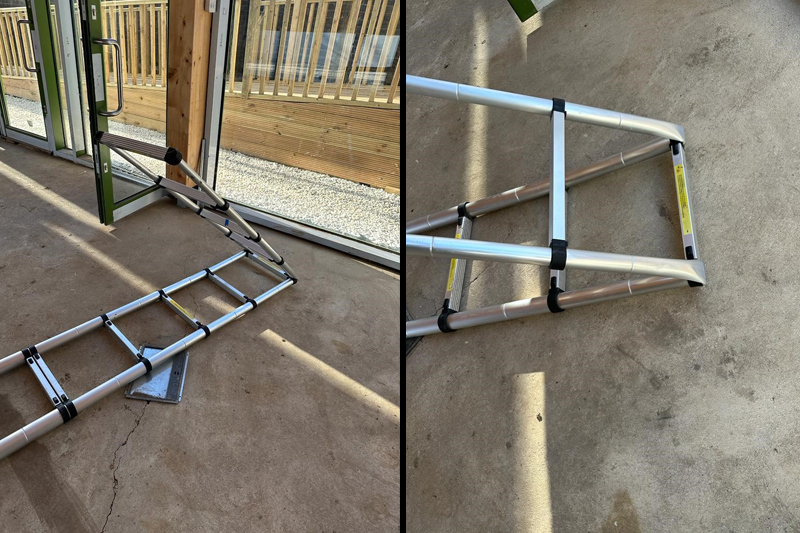
Despite taking all the right precautions and correctly following best practice in its use, the ladder bent and then totally sheared in half. This resulted in Joffrey suffering serious injuries and a lengthy recovery period, prompting deeper questions about how safety-critical products are sold online.
He says: “I was working at height on a normal job and using a telescopic ladder I’d recently purchased online. Without warning it collapsed, causing me to endure a fall of approximately 16ft (5 metres). This is the nightmare scenario when using access equipment because you don’t get a second chance to react.
“There was the immediate physical impact, then the follow-on reality of surgery, rehab, pain management, and the psychological knock you get when something you trusted simply gives way.”
A wake-up call
The enforced downtime quickly highlighted to Joffrey the financial vulnerability that comes when tradespeople can’t work.
He explains: “When you’re a tradesperson, you’re the engine of the business. If you can’t work, the job pipeline stops, cash flow gets strained, and you can lose momentum with customers.”
The experience reinforced lessons around resilience and contingency planning, and changed how he viewed online listings that appear compliant at first glance.
“Looks compliant” isn’t enough
At the point of purchase, the ladder listing appeared credible, referencing recognised standards and using familiar compliance language. Like many buyers, Joffrey assumed openly listed safety-critical equipment on major marketplaces would have passed some scrutiny.
“The listing looked legitimate,” he says. “It referenced compliance, used the language you would expect, and was presented in a way that implied it met recognised standards.”
However, the post-incident investigation told a different story, as he describes: “I learned that ‘looks compliant’ and ‘is compliant’ are not the same thing. Marketplaces may be useful for convenience, but the model can make traceability and accountability messy.”
On the back of the incident, Joffrey found himself navigating what he describes as ‘a grey zone’ between seller and platform, where responsibility was difficult to pin down. This also highlights the benefits of purchasing from trusted sources such as wholesalers, where such issues are often avoided.
From frustration to FOLO-UP
Rather than simply sharing his experience, Joffrey began developing FOLO-UP – an independent monitoring platform designed to identify potentially unsafe products that are still being sold online.
He says: “FOLO-UP was born directly out of frustration and a sense that the system was upside down. I wanted to build something practical that reduces the chance of the same thing happening to someone else.”
The platform monitors official safety alerts and recall databases, before cross-referencing these against live listings across multiple online marketplaces. Where matches are identified, the system flags the products and generates structured reporting to support removal requests.
During testing, FOLO-UP identified nearly 100,000 unsafe listings across more than 30 marketplaces. According to Joffrey, up to 80% of flagged listings were removed in a typical month.
An extra safety lens for buyers
For electrical installers and other trades professionals, the platform is intended to act as an additional layer of due diligence when sourcing equipment online.
Joffrey explains: “In practical terms, FOLO-UP monitors product safety alerts and recall information from official sources. It then checks online marketplaces to see whether those products appear to still be available.”
Additionally, he believes tradespeople should treat access equipment and other safety-critical purchases with the same rigour that’s applied on-site: “A cheap ladder that fails isn’t a bargain; it’s a liability.”
Raising the bar
Looking ahead, Joffrey is calling for stronger differentiation between everyday consumer goods and safety-critical equipment sold online.
He says: “I’d like to see marketplaces treat safety-critical products as a special category with stricter rules. Compliance claims shouldn’t just consist of text on a page; they should be supported by traceable documentation.”
FOLO-UP is now seeking partnerships with regulators, retailers and industry bodies as it expands its monitoring capability.
For Joffrey, the mission remains a personal one: “Ultimately, I want FOLO-UP to support consumers, tradespeople and regulators with a clearer picture of what’s out there, how it’s being sold, and how quickly it’s removed if/when it’s found to be unsafe.”
Visit the FOLO-UP website here
Find more industry features here