
Image credit: Portugal Beach © Nikita (Adobe Stock)
With demand for electricians in high demand on the continent, particularly those with knowledge and skills in solar PV, Manuel Sequeira of Algarve Electric identifies the key things UK professionals need to know if they want to forge a career in Portugal.
Portugal has become one of the most attractive destinations in Europe for UK tradespeople looking to work abroad – and for electricians, the current opportunity is significant.
A booming property market, one of the highest solar irradiance rates in Europe, and a large English-speaking expat community all combine to create genuine demand for skilled electrical professionals.
But working as an electrician in Portugal is not as simple as packing your tools and flying south.
Here’s what UK electricians need to know before making the move:
Certification and qualifications
The most important thing to understand is that UK electrical qualifications aren’t automatically recognised in Portugal.
To legally carry out electrical work you must be registered with the DGEG – the Direção-Geral de Energia e Geologia, Portugal’s national energy and geology authority. This is the Portuguese equivalent of being a registered electrician under NICEIC or NAPIT schemes in the UK.
The DGEG registration process requires you to submit your qualifications and experience for review. Without DGEG certification, you cannot legally issue electrical compliance certificates – and any work you carry out will not be valid for insurance, property sales or rental licence purposes.
This isn’t a barrier to entry, rather a quality standard that protects both the electrician and the customer. UK electricians who go through the DGEG process find that their existing qualifications and experience are well respected.
The market opportunity
Portugal’s Algarve region alone is home to tens of thousands of British and Irish expats, with more arriving every year. The demand for English-speaking, certified tradespeople is consistently higher than the supply – which means that qualified electricians who can communicate clearly in English and work to certified standards are in a strong position.
The work available spans a wide range of services. General electrical repairs and fault finding, full property rewires for older villas and apartments, solar panel installations, air conditioning installations, smart home systems, pool and garden electrics, and electrical compliance certificates for property sales and Alojamento Local rental licences all represent regular, recurring demand in the expat property market.
Solar energy – the biggest driver
Portugal receives over 3,000 hours of sunshine per year – more than twice the UK average. Combined with rising energy costs and generous government incentives for renewable energy, solar panel installations have become one of the fastest growing areas of electrical work in Portugal.
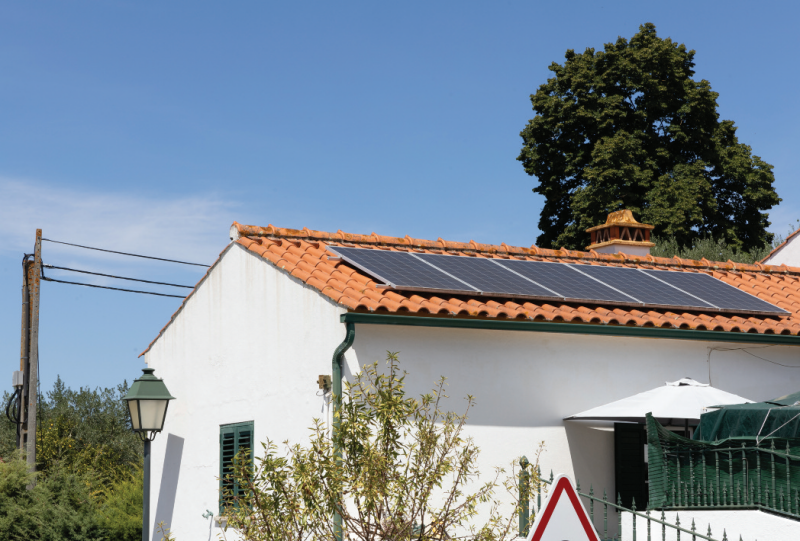
UK electricians with solar installation experience are particularly well placed to capitalise on this. Algarve villas typically have large roof areas and high energy consumption from air conditioning, pool systems and smart home technology – making them ideal candidates for high-capacity solar arrays with battery storage.
The Portuguese government’s self-consumption regime allows property owners to sell surplus energy back to the grid, making the financial case for solar installations compelling for both primary residences and holiday let properties.
Better understanding Portuguese electrical standards
Portuguese electrical installations follow European standards – broadly similar to those used across the EU, but with some important differences from the UK system.
The most significant is the absence of the UK’s ring final circuit wiring system. Portugal uses radial circuits throughout, which UK electricians adapt to quickly but need to be aware of from the outset.
Consumer units, wiring colours and earthing systems also differ slightly from UK practice.
Taking time to understand these differences before starting work in Portugal is essential – both for safety and for ensuring your installations pass certification.
Practical considerations
Beyond qualifications and technical knowledge, there are practical steps to consider before working in Portugal.
Registering as a self-employed worker – known as an ENI or Empresário em Nome Individual – is the simplest legal structure for most electricians working independently. You will require a NIF (Portuguese tax identification number) and you’ll need to register with the Portuguese tax authority, the AT.
Opening a Portuguese bank account, understanding your tax obligations and ensuring you have adequate professional liability insurance are all important steps before taking on your first job.
Language
While English is widely spoken in the Algarve’s expat community, Portuguese is the working language for all official documentation, DGEG communications and dealings with local authorities.
Basic Portuguese or a reliable translator will make the administrative side of working in Portugal significantly easier.
For UK electricians with solid experience and a willingness to navigate the certification process, Portugal – and the Algarve in particular – represents a genuine and growing market.
Find more industry features here