James Daniels, Business Unit Manager at Kiwa, examines why the introduction of a new cable fire resistance test will help to further drive safety standards in high-rise buildings.
Kiwa has continued to respond to evolving requirements for fire safety in high-rise residential buildings with the introduction of the world’s first certified 180-minute fire resistance test for cables.
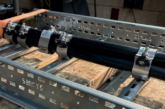
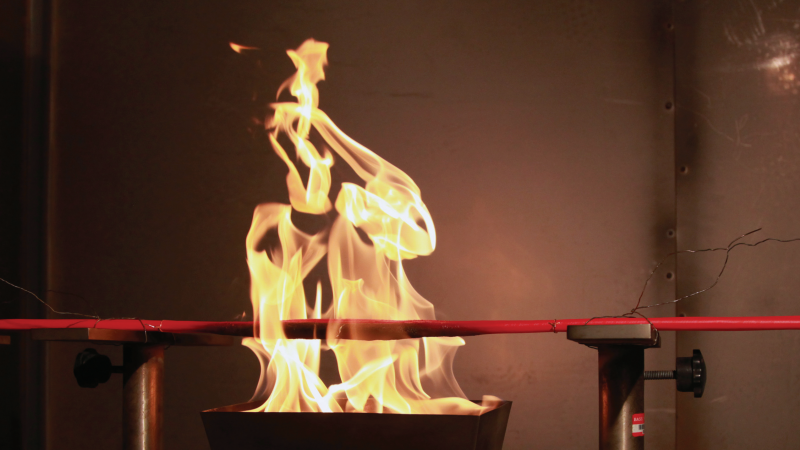
The new prolonged burn test, as part of BASEC Certificate of Assessed Design (CAD058), goes beyond the 30, 60 and 120-minute benchmarks which form the basis of current standards for fire-resistant cables.
Kiwa’s BASEC business unit conducts independent tests at its own laboratories, with the CAD providing assurance to all those involved in fire systems specification and management that the product still performs as expected – even after 180 minutes’ exposure to fire.
The current standards for 30, 60 and 120-minute fire-resistant cables have underpinned the design of life safety systems for many years. They still govern the design of systems such as fire detection and alarm systems, emergency lighting, emergency voice communication, smoke extraction and pressurisation systems, and firefighting infrastructure.
However, these standards date from times when occupancy levels in high-rise buildings were generally lower. Meanwhile, the quantity of buildings exceeding 150 metres in height is rising rapidly, meaning more intense requirements around safety and evacuation, with more people needing to exit the building and having to cover more distance to do so.
These greater physical heights and higher occupancy rates place greater demands on the systems designed to protect occupants against the risks posed by fire.
All of this means the role of interconnected active fire safety systems has never been more prominent. Should a fire break out, the integrity of circuits – and therefore the cables that connect critical fire safety elements – is vital. The longer these cables remain functional, the greater the time available for evacuation and emergency response.
Greater stringency in legislation
While the minimum fire resistance standards for cables haven’t yet been altered to reflect these changing building risk profiles, at Kiwa we believe it’s only a matter of time given ever greater stringency in legislation and sector-specific regulation.
Enacted in 2022 in light of the Grenfell disaster, the Building Safety Act has heightened the role of ‘Accountable Persons’ when it comes to the specification, installation, maintenance and performance of fire mitigation systems within high-rise buildings in the UK.
Cables are a particular challenge as they’re hidden away, making maintenance and replacement far more difficult. James Daniels, Business Unit Manager at Kiwa, examines why the introduction of a new cable fire resistance test will help to further drive safety standards in high-rise buildings.
Regulation 38 now mandates that detailed, evidence-based fire safety information, such as photographs and commissioning records, must be supplied at project completion. At the same time, BS 9991:2024 significantly revised the UK’s fire safety code of practice for residential buildings, optimising evacuation procedures and enhancing structural protection, while minimising fire risks in modern residential buildings.
Given the tightening regulations, building owners, managers and specifiers are increasingly going beyond current levels of compliance and seeking systems that are proven to perform at the highest level. Sooner rather than later, performance standards in fire resistance for cables will be tightened in line with this.
If adopted into BSI standards, CAD058 will be the force behind an effective tripling of circuit integrity performance, providing even greater resilience in buildings where firefighting may take place over an extended period, and evacuation may also need to be staged.
Find out more about the Certificate of Assessed Design from Kiwa here
Find more industry features here