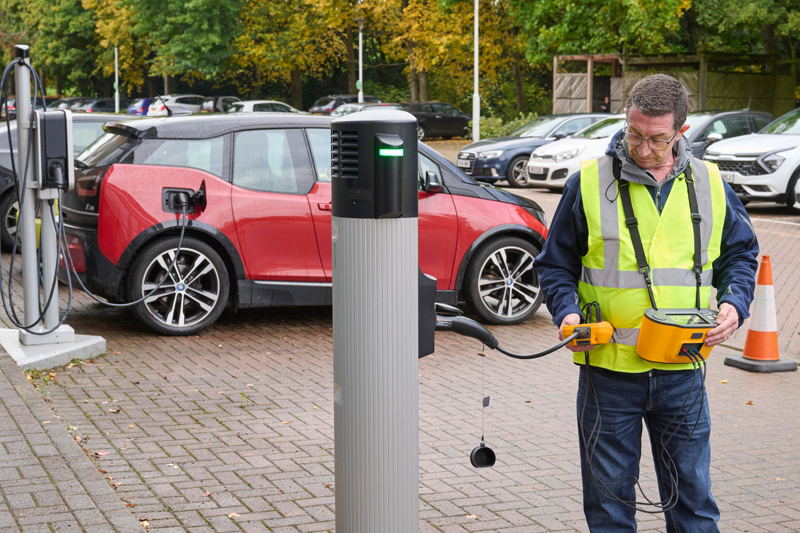
Theo Brillhart, Fluke Corporation’s Technology Director, R&D, examines why effective maintenance is the key to eliminating EV charging anxiety.
Electric vehicle (EV) adoption is no longer hypothetical. The UK was the biggest EV market in Europe in 2024, and we now see over 1.5 million EVs on UK roads. The transition is well underway.
What’s less certain is whether the charging infrastructure can keep pace. Without reliable, accessible, and well-maintained charging stations, momentum could falter.
From range anxiety to charging anxiety
For years the dominant barrier was “range anxiety”, but the new concern is “charging anxiety.” Drivers must now consider: “Will I be able to find a working charger when I need one?” It is a shift that moves the focus away from the vehicle and onto the reliability of the infrastructure behind them.
If EV adoption is to scale, reliability must become universal. That means any driver should be able to pull into any charging station and expect it to work. Initiatives such as CharIN are pushing interoperability standards and running cross-platform trials. Progress is visible, but technical standards alone will not solve the problem.
Maintenance as a reliability strategy
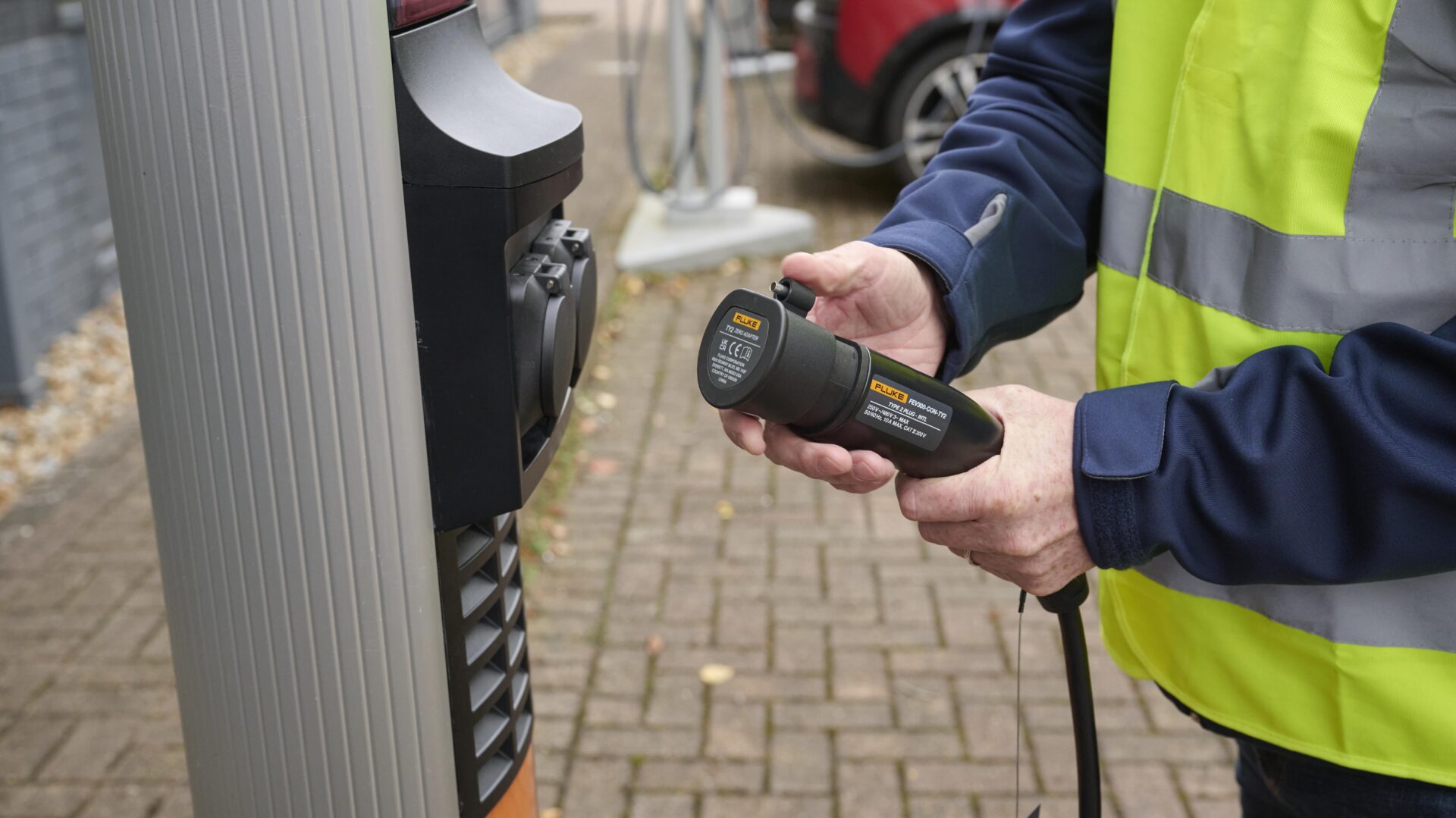
Effective strategies require a balance of reactive maintenance – responding quickly to vandalism, collisions, and unexpected failures – and preventive maintenance, which builds resilience into daily operations. Predictive maintenance goes further by leveraging data and analytics to identify problems before they lead to outages.
This need is reinforced by a recent Fluke survey: 36% of respondents cited charger maintenance as a top industry challenge, 44% pointed to inoperable chargers as a major hurdle, and 40% flagged software incompatibility.
Preventive work should include remote monitoring of charger performance, scheduled inspections of safety systems, regular servicing of cooling systems and power electronics, and testing of payment systems.
Remote analytics are also valuable. They give operators 24/7 visibility into charger status, reduce unnecessary site visits, and allow failures to be diagnosed before users encounter them.
To make this progress possible, there are three further areas that must be addressed:
1. Standards and tools
Servicing EV chargers requires a workforce trained to original equipment manufacturer (OEM) specifications, armed with advanced diagnostic tools, and working under consistent standards. Without that alignment, outcomes vary, maintenance costs increase, and the inconsistency breeds consumer frustration.
2. Building the workforce
A dependable charging ecosystem relies on a trained and continually certified workforce. Firmware updates, higher-power charging, and advanced thermal systems change the skill requirements every year, so training must evolve accordingly.
3. Aligning incentives
Well-crafted service-level agreements (SLAs) set expectations for response times, resolution targets, and uptime guarantees. Maintenance teams must also have access to diagnostic codes, error logs, and performance data, so that operators and service providers are working from the same real-time information.
Designing for the future Every new charging station built today must be designed with long-term reliability in mind, from having equipment certified to ISO and IEC standards, and mandating compliance with the Open Charge Point Protocol (OCPP), to ensuring OEM-certified training for service providers, and structuring warranties and contracts so that uptime is rewarded. At its core, this is what EV adoption depends on.
The industry is successfully tackling range anxiety by delivering longer-range vehicles and expanding home charging. It must now bring the same urgency to the charging infrastructure.
Get more details on Fluke’s range of EV testing and maintenance solutions here
Find more industry features here