
Do you know how to use accent lighting to provide that extra ‘wow’ factor? Anthony Martindale, Senior Product Manager at Collingwood Lighting, provides some tips so that you are seen as far more than “just an installer.”
While you’ll be asked to install general lighting using downlights, pendants or panels for most domestic installations, accent lighting will add depth, mood and interest. This plus task lighting will transform a flat lighting scheme into something with a real ‘wow’ factor. And it’s not difficult to do with a little bit of knowledge.
Creating layering of light
A great lighting scheme uses layers of light to create the right atmosphere for a space. It combines general or ambient lighting with task and accent lighting to create a visually interesting whole.
While task lighting will enable them to complete a task, whether that is working at a computer or preparing food, accent lighting will add interest to a room.
Rather than simply make a room bright, you need to work with your customer to create a look that will impress them and visitors. It’s not just about adding more light but considering where to use it and what to leave in shade.
A common mistake is to overdo a scheme, which will ruin what you and your customer are trying to create. Instead, think about creating bright focal areas, darker zones to add depth and soft background lighting.
Where to use accent lighting
When you walk into a room consider what stands out. Talk to your customer and ask them how they want a room to feel and what they want people to notice when they walk in.
Lighting design is all about contrast, so prioritise and pick two or three features that they want to highlight. Common examples include artwork, architectural details, shelving, textured walls, plants or cabinets.
Top tips for accent lighting
You want to see the effect of the lighting but not the source, so the lighting either needs to be hidden from view or directed at the object to avoid glare.
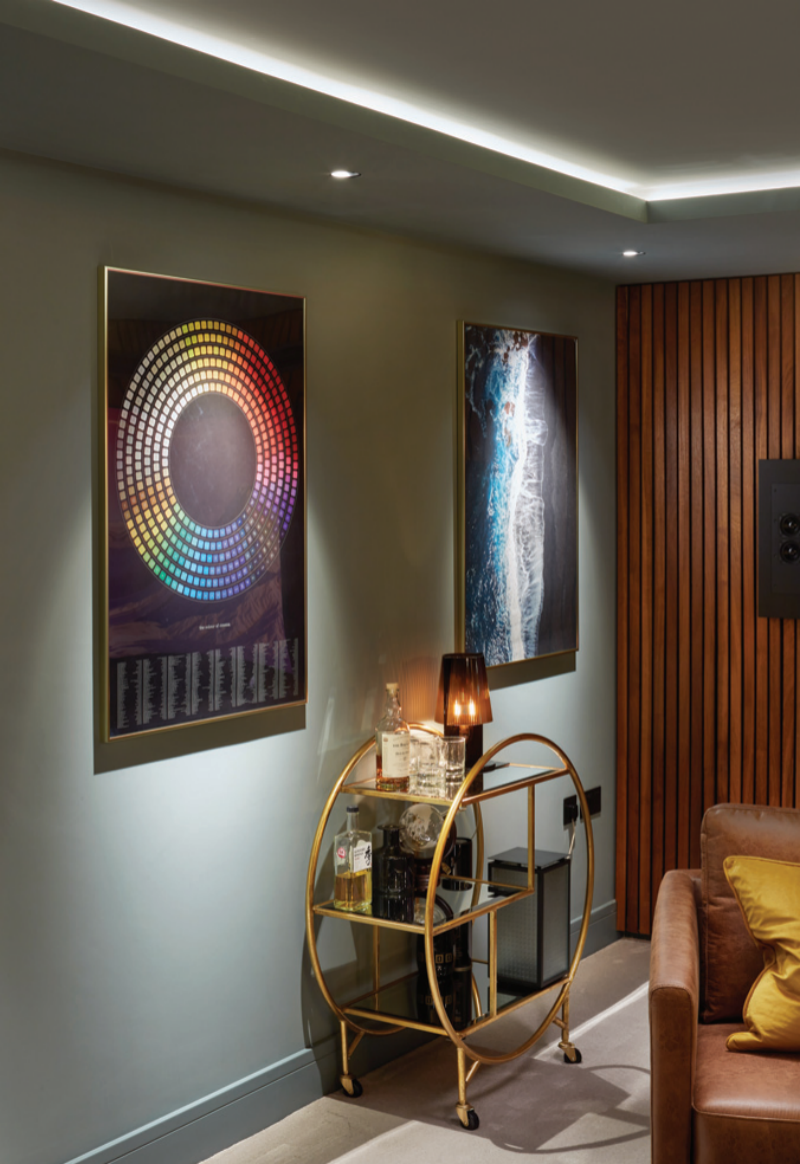
For artwork and sculptures use adjustable spotlights or picture lights to direct light where it’s needed. A narrow beam angle will create drama.
Think about using uplighters or downlighters to emphasise architectural details like exposed brick, textured walls, columns, or interesting ceiling designs.
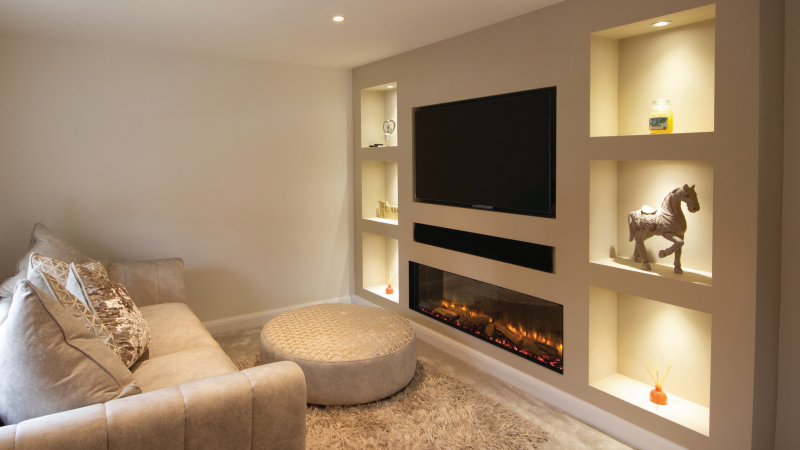
For an easy upgrade, which is simple to install and will add a touch of sophistication to any space, add LED strips to shelves, cabinets, wardrobes or even stairs. These offer a soft light and emphasis any linear features in a room. You can take this a step further by hiding LED strip, which offers a soft diffuse light that creates atmosphere for a sophisticated feel in any room. You can use it in ceiling coving, headboards or behind furniture.
To emphasis texture, wall grazing is another useful trick to have up your sleeve. If your customer has a brick or stone wall, or even wooden panels, you can help emphasise this area by installing fittings close to the wall. This creates light and shadow to emphasis texture.
Another option is wall washing. Here you place spotlights a few feet away from the wall to create a soft even glow that will smooth out imperfections and make a room feel larger.
Other factors to consider
Your customer will need to control their accent lighting so recommend separate switching and/or dimming. If they have the budget, then more sophisticated control systems allow them to consider setting different lighting scenarios, depending on what mood they want to create in a room.
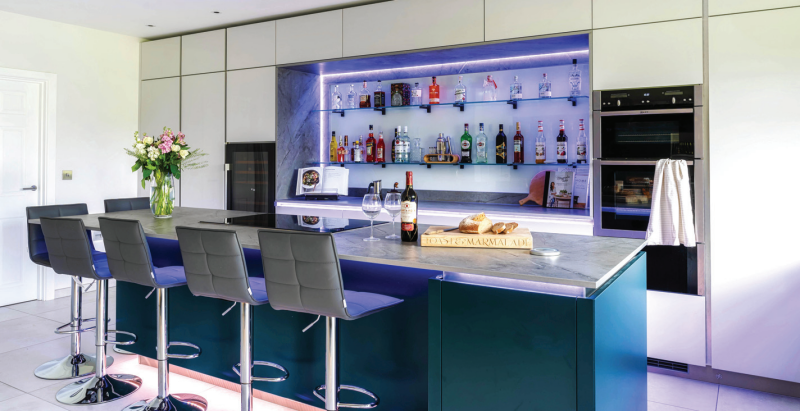
Because you use accent lighting to emphasise features it’s worth considering the colour temperature of the lighting. For warmer coloured features such as oranges or reds or for wood, a warmer correlated colour temperature (CCT) of 2700K or even 2200K will help make it glow. If you’re highlighting cooler colour temperatures such as blues, greens or white then recommend a higher CCT of 4000K to make it even more vibrant.
And if you’re lighting artwork then the colour rendering index (CRI) is important. For most lighting, a CRI of more than 80 is fine, but where you want a very accurate colour representation then choose a source that has a CRI of greater than 90.
Adding accent lighting in the right place is a simple way to improve your customer’s lighting. Using it in combination with ambient and task lighting will help produce sophisticated multi-layered effects.
Ultimately, a few well-placed suggestions are likely to help you win more business with a higher value.
Browse the full Collingwood Lighting product range here
Find more industry features here