Steve Dunning, Managing Director of Martindale Electric, explains the hidden electrical dangers that can occur when they are not checked as part of the standard safe isolation process.
Proving dead effectively and safely is vital when it comes to safe isolation and reducing the number of electricity-related injuries within the workplace. However, there are other hazards to factor in – like potential injuries caused by coming into contact with unexpectedly live metal parts.
Safe isolation process
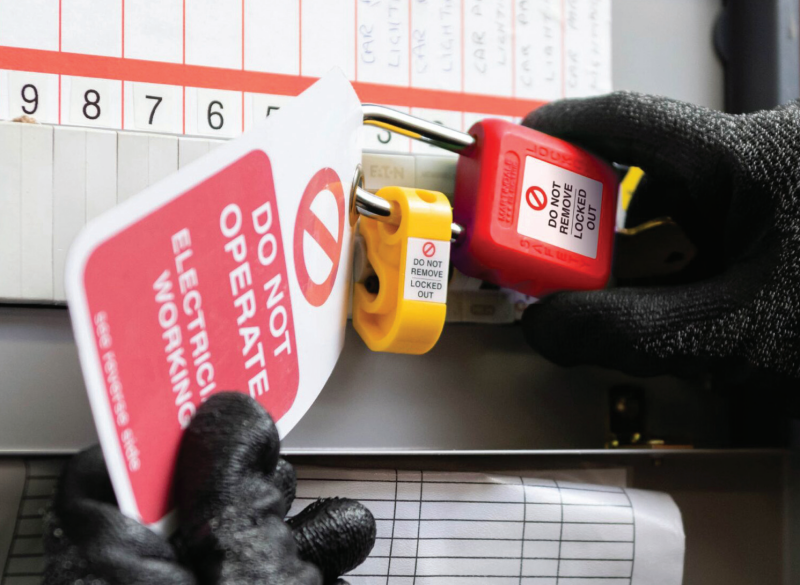
There has been significant activity from both electrical industry bodies and electrical test equipment suppliers, driving awareness around the subject of safe isolation. The process states that the relevant breaker or switch has to be identified, locked off correctly, tagged and the circuit verified dead before proceeding.
For an effective safe isolation process it is key to ensure the correct equipment is available. Voltage Indicators (VI) must comply with legal safety standards, namely BS EN61243-3 and BS EN61010-1. Products such as Martindale’s VI13800 voltage indicator have been specifically designed to meet the standards.
Also important is ensuring that the Lock out, tag out (LOTO) items available cover all potential isolation requirements. Generally, this would consist of a selection of MCB lock off devices, lock out tags, warning labels, padlock/s with a unique key/s, and a hasp if more than one person is working on a system.
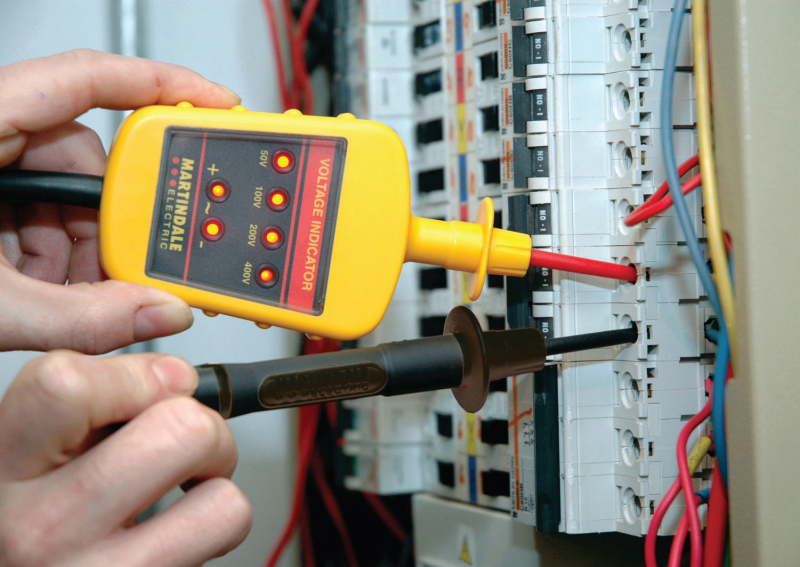
When the correct equipment is available and the electrical circuit is locked off, the basic proving dead process involves an initial prove, testing the VI against a proving unit to make sure it is working correctly.
The next step is voltage test. The proved VI is used to check for dangerous voltage levels on the circuit to be worked on, whether single- or three-phase.
Finally, prove the VI against the proving unit again before starting to work on the circuit. This ensures the VI is functioning and working correctly to make sure that no damage has occurred, or fault has appeared, on your equipment.
It is always recommended to use a dedicated proving unit matched to the VI to fully test that all LEDs on all ranges are working. A proving unit is safer than the mains and provides a live source wherever you are working.
Additional hazards
Despite the rigorous process of safe isolation, other types of electrical hazards can still be present when working on electrical systems.
One such issue is injuries caused to engineers, contractors, electricians, and others by encountering unexpectedly live metal parts including metal casings on equipment or appliances, pipework, plumbing, and other types of metalwork which should be earthed. This invisible danger can be present in any workplace situation ranging from simple domestic wiring through to commercial and industrial installations.
There are many types of faults which can cause live metalwork, including: incorrect or hazardous wiring, trapped cables, and Protective Earth Neutral (PEN) faults.
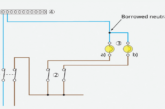
Widely discussed in the industry, the PEN fault is where a break or “open circuit” occurs in a PEN conductor which serves as both the neutral and protective earth. PEN conductors are generally present outside of an installation and are separated into a neutral and protective earth at the consumers supply connection, the split providing a safe local separate earth.
The combined PEN conductor’s primary role is a return path for normal load current while also serving as the protective path for fault currents, ensuring that exposed conductive parts remain at or near-earth potential.
A broken or faulty PEN conductor can cause dangerous voltages to appear on metalwork, creating an electric shock risk, fire risk, and/or equipment damage. PEN faults in electrical supply systems can cause safety issues regarding electrical vehicle chargepoints; to combat this modern EV chargers should incorporate PEN fault protection.
Further safety checks – touch voltage
Touch voltage is the electrical potential difference between exposed metalwork and the earth due to a fault condition. The standard safe isolation process does not check for potentially live metalwork, so performing a touch test is an essential addition.
There are a number of tools available which are used for performing this test, primarily non-contact and single-pole contact indicators. Unlike a compliant safe isolation voltage indicator both require batteries and should always be fully checked for functionality prior to use.
Non-contact voltage detectors should always be used with caution as they can often be sensitive to other signals such as static electricity. Care should also be taken regarding the voltage threshold of the indication to ensure that unsafe voltages can actually be detected. It’s also not possible to prove they are working correctly with a standard proving unit.
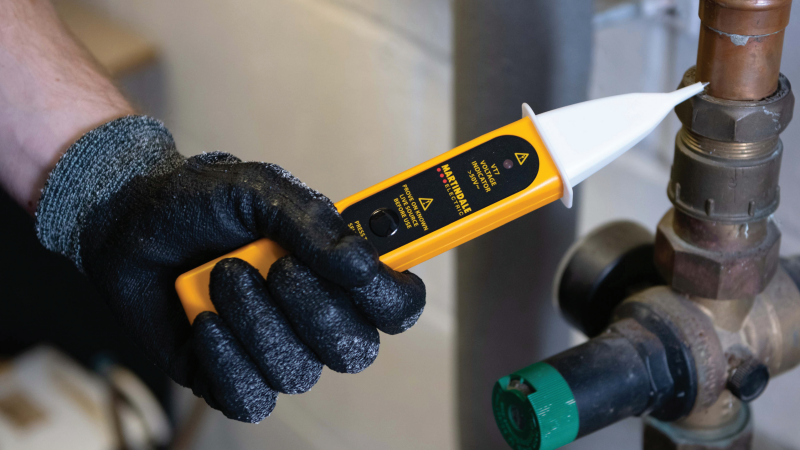
Single pole contact indicators are a more reliable solution and can be incorporated into touch test safety procedures to help identify potential issues. For example, the Martindale VT7 is a single-pole contact voltage indicator which detects AC voltages of 50-600 V. This type of tester should always incorporate a self-test function and preferably be IP rated for indoor and outdoor use.
Diverted current fault
A diverted current fault occurs when electrical current flows away from its intended path due to damaged insulation, earth or neutral failure and other types of faults. This can create an abnormal current flow causing overheating, equipment damage, and potential electric shocks from unexpectedly live metalwork. While this fault is present the circuit may appear to be working correctly.
Diverted current can be identified by checking for current flow, where appropriate, using a suitable clamp meter such as the Martindale CM79.
Measuring the earthing conductor while the circuit is supplying load can help identify diverted current. Low level leakage currents would be considered normal, but readings of several amps indicate a potential fault condition, possibly an open circuit PEN conductor.
Safety first
Safe isolation is neither complex nor costly but is vital for compliance with the Electricity at Work Regulations and for preventing harm. Locking off devices, using compliant voltage indicators, and proving dead with proving units are central to the process.
Being aware of the risks associated with live metalwork is also key and, before working on any installation, precautions should be taken to identify hazardous touch voltages on exposed or extraneous metal parts.
By embedding these procedures, workplaces can significantly reduce the risk of electrical accidents. Safety must always remain the priority, and the correct safe isolation procedure provides the foundation for protecting both people and infrastructure.
There’s a wealth of online support materials to help generate safe electrical working procedures. The Martindale ALIVE campaign is a simplified and easy way to remember the process and assist with safe isolation implementation, while the “STOP. No Check. No Contact” covers the hazards associated with live metalwork.
Get more information on Martindale’s alive campaign here
Find more industry technical articles here